


Film photography has made a huge resurgence in the wedding world over the last few years, and for good reason.
More and more couples are asking about film wedding photography, what makes it different from digital, and whether they should have film photography included in their wedding coverage.
So, what actually is the difference between film and digital wedding photography? Why do I shoot both at weddings? And what are the benefits of each?
In this blog post, I’ll break down the differences between film and digital photography, what each brings to a wedding day, and how I approach combining the two throughout the course of a wedding day.
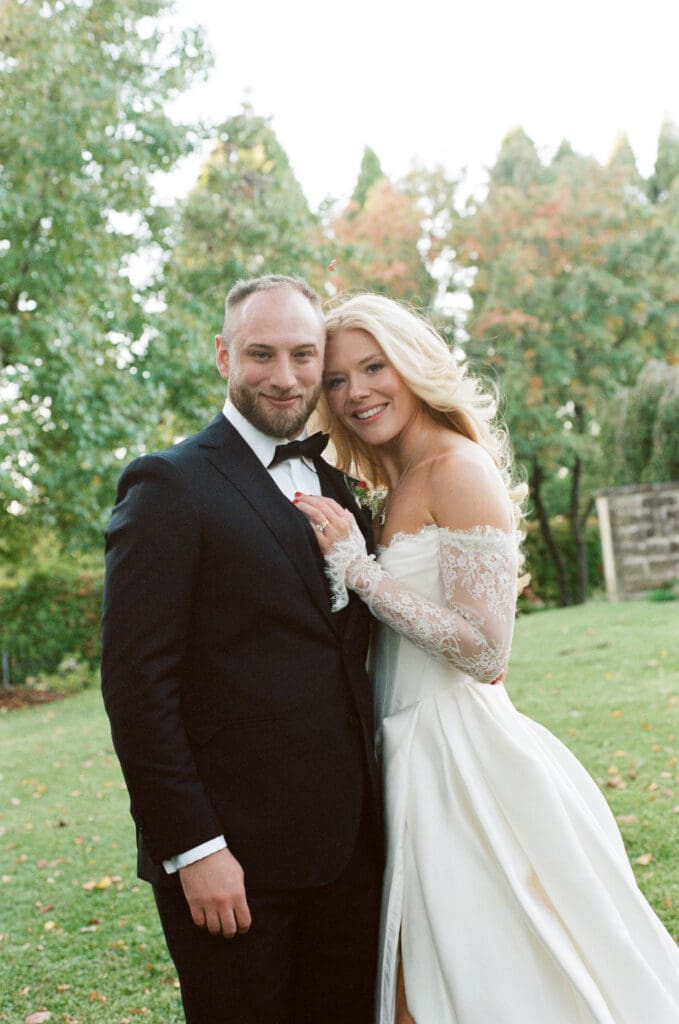
Film vs digital wedding photography: what’s the difference?
At its simplest, the difference comes down to how the photograph is captured.
With film photography, light is recorded onto a physical piece of photographic film inside the camera. It’s analog. It’s real.
With digital photography, light is recorded by a digital sensor inside the camera and stored as a digital file.
The way the two photographs are created is fundamentally different, and that difference affects the way the way the images look, the way I approach photographing with each medium and the experience of photographing a wedding.
Digital photography is very much the standard in the wedding industry. But over the last few years, there has been a noticeable increase in couples looking for film photography for their wedding, along with more wedding photographers offering it.
So why the return to film?
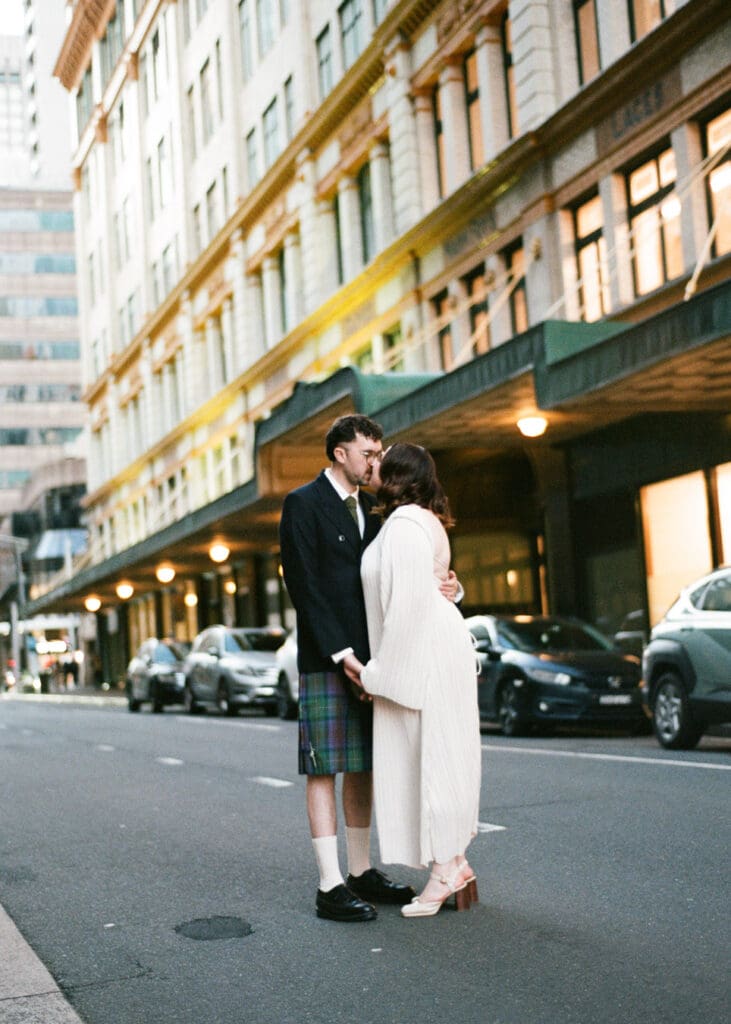
What is film wedding photography like?
The first major difference with film is that the photograph you take is recorded onto something tangible – the film itself.
You don’t know exactly how the photograph looks after you’ve taken it. You can’t delete it. And there are only a limited number of photographs available on each roll, generally 24 or 36 frames.
A lot of people talk about film having an intangible “vibe” about it. Funnily enough, I think a lot of that feeling comes from the physical nature of film itself.
There are imperfections. There’s grain. There can be light leaks. Sometimes the photograph is taken just a little bit before or after someone’s eyes are open. Things can go wrong – and because it the photo isn’t instantly showing up on a screen behind the camera, you don’t know. But that’s part of the magic of it, especially when you get it right.
Because you only have 24 or 36 shots per roll, photographing on film also requires a slightly more intentional approach. You have to think before pressing the shutter. You’re not taking ten photographs of exactly the same moment just because you can.
Why have film photography at a wedding?
For me, this is the real appeal of film wedding photography.
In a world where almost everything is digital, immediate and endlessly reproducible, film brings back a sense of something physical and real.
There’s the anticipation of not knowing exactly what you’ve captured. There’s the grain and the imperfections. There’s the fact that every frame is a little more considered.
And somehow, all of those things combine to give film photographs a feeling that can be difficult to replicate digitally.
It’s not necessarily about film being “better” than digital. It’s about it being different.
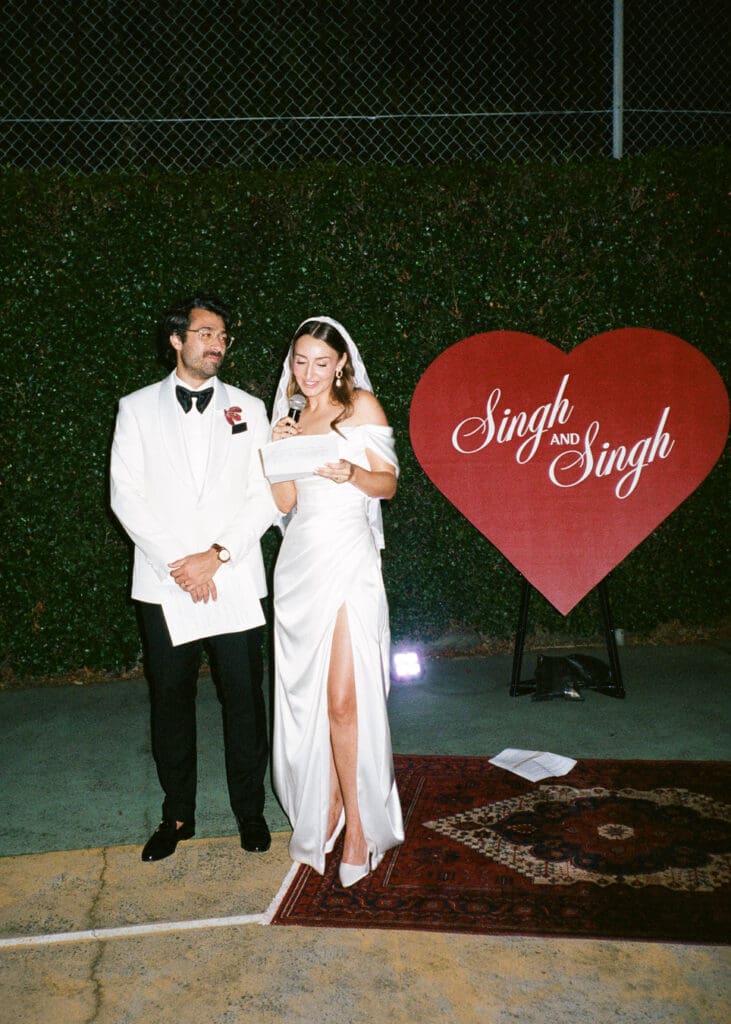
What is digital wedding photography like?
So I guess the question is, if film offers all of that, why shoot digital at all? Because the second reality is, there are so many benefits to digital wedding photography.
You can take thousands of photographs on a single memory card. You can immediately look at what you’ve photographed on the back of the camera. You can adjust your settings, change your approach or react to what’s happening in front of you.
Digital cameras also produce incredibly detailed files, which give you a huge amount of flexibility when editing the photographs afterwards.
For a wedding photographer, this means there’s a level of certainty that comes with digital photography; You can check that you’ve got the shot. You can photograph something quickly and confidently without worrying about running out of frames.
For couples, that means digital wedding photography provides a level of coverage and consistency that is particularly valuable on a wedding day.
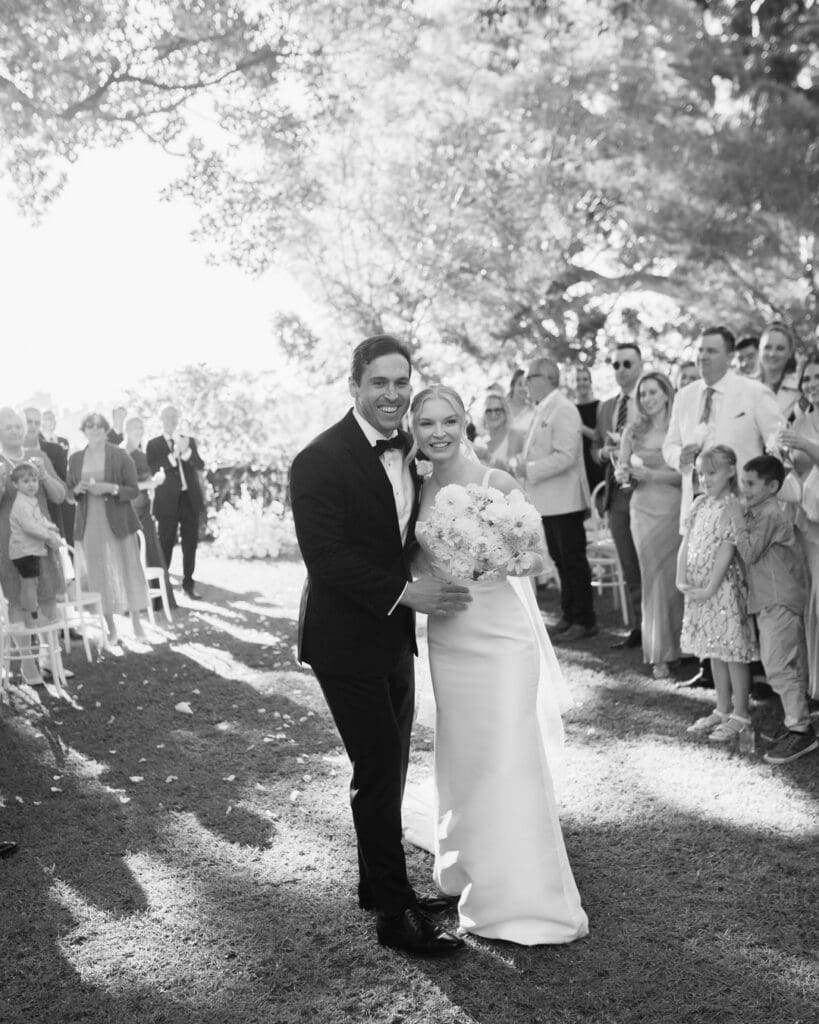
Why I shoot digital and film at Weddings
For me, the answer is pretty simple: I love having the benefits of both available to serve what works best for that moment.
I absolutely love photographing weddings on film, but I also understand that there’s a certain level of certainty that comes with digital photography that is hard to pass up, particularly when you’re photographing something as unrepeatable as a wedding day.
Before a wedding, I like to chat with couples about what is important to them and how they feel about film photography.
For most couples, I photograph around 80% of the wedding on digital, with the remaining coverage on film.
For a full day of wedding photography, I generally shoot around 4–6 rolls of film, which works out to roughly 100–150 film photographs delivered in the final gallery.
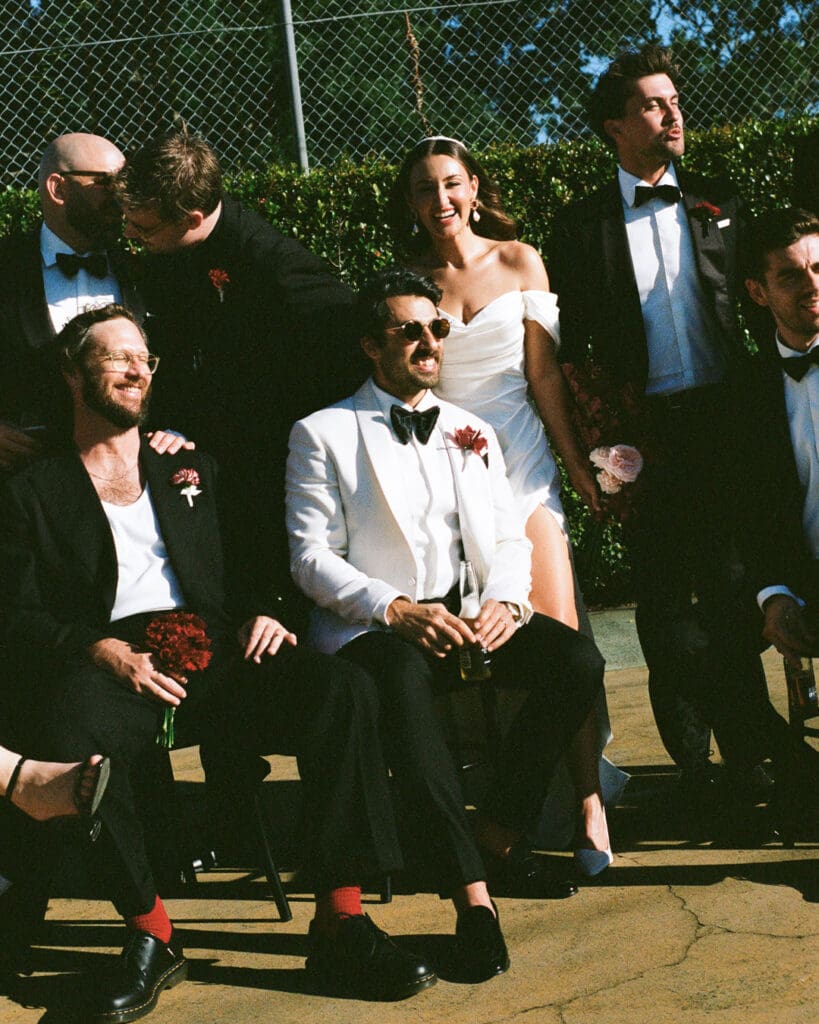
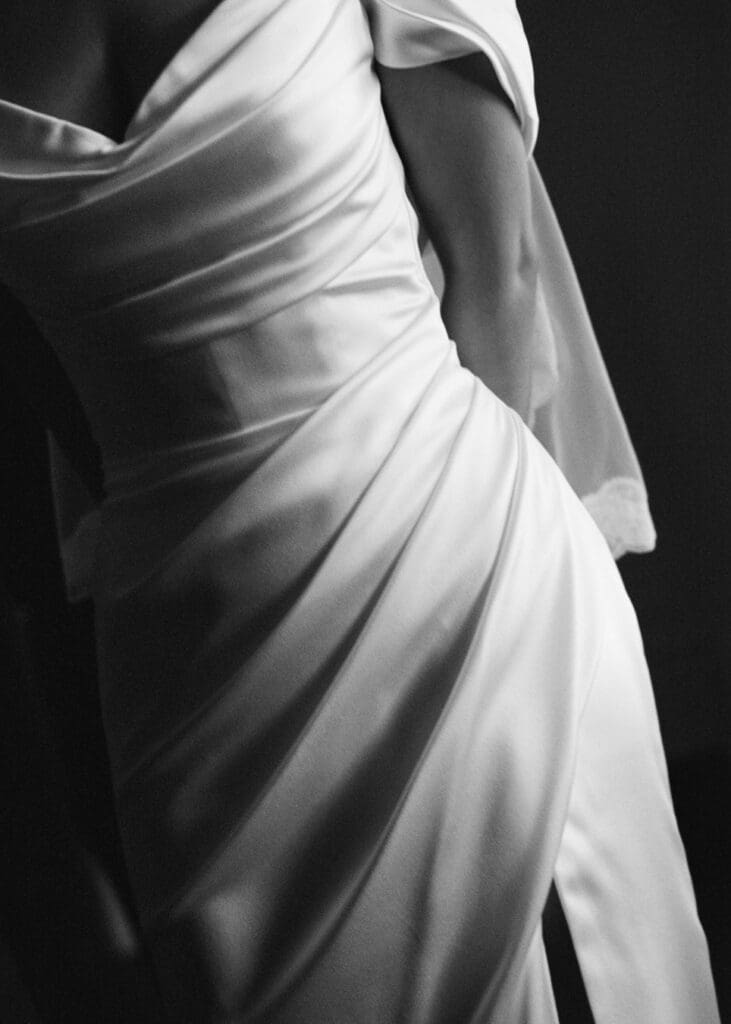
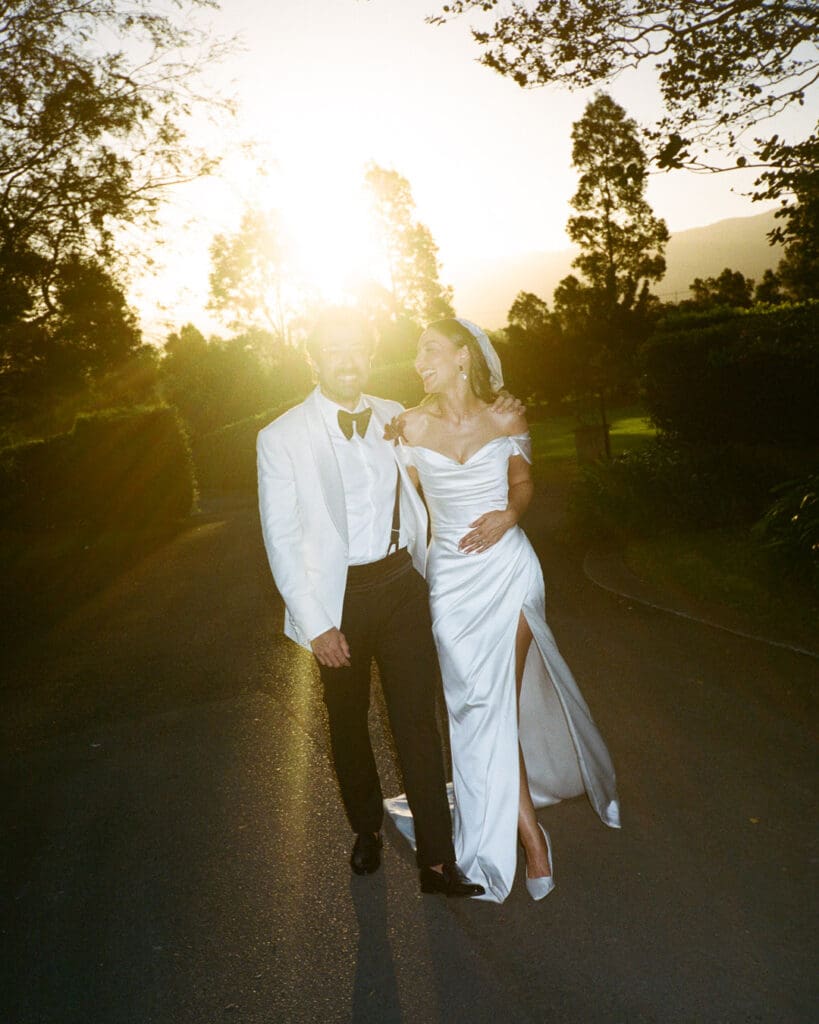
I particularly love using film for the little details and smaller moments that carry the feeling of the day. And I love photographing beautiful portraits on film in good light because, well, there is that extra little bit of magic that comes with it.
Can you have a wedding photographed entirely on film?
Absolutely.
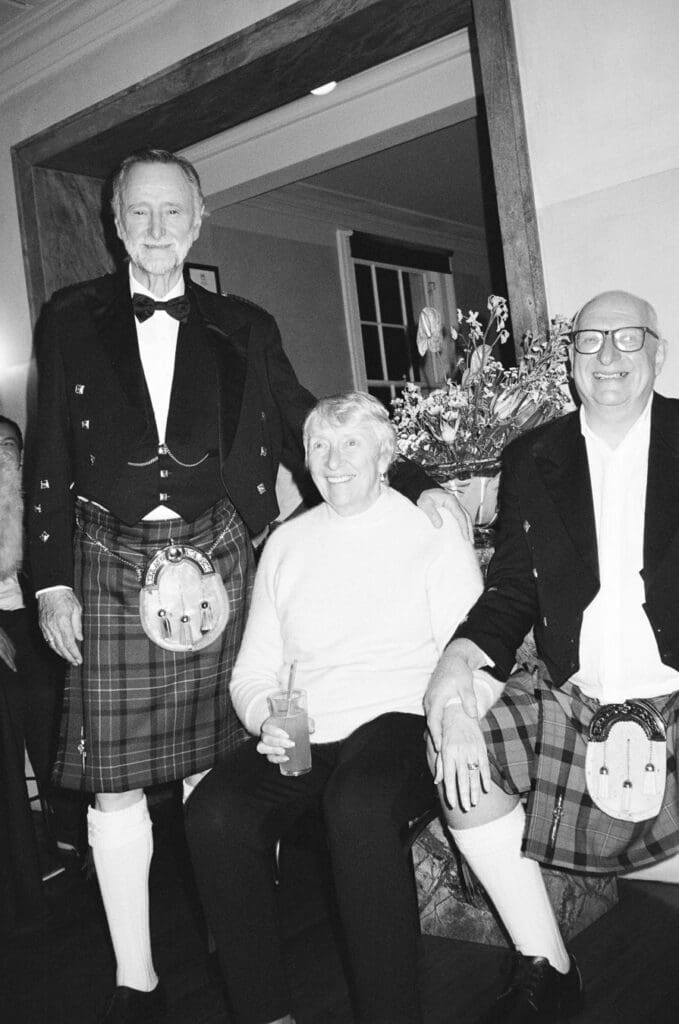
If a couple tells me that they love film photography and would prefer it over digital, I’m completely open to photographing their wedding entirely on film. I’ve photographed a few celebrations this way, and it’s epic. It’s also a very different experience as a photographer because every frame becomes even more considered.
For couples who love the look, feel and process of analogue photography, 100% film wedding photography can be a really special way to document a wedding day. The trade offs are; there’ll be fewer photos in the final gallery, there’s no immediate preview, and there’s a little more uncertainty involved.
Frequently Asked Questions
Is film photography worth it for a wedding?
Yes, absolutely. It adds a whole new dimension and depth to a final gallery.
Can a wedding be photographed entirely on film?
Yes! Absolutely. The benefits of doing so are discussed above.
How many film photos do you get at a wedding?
When photographing both film and digital, around 4-6 rolls which will lead to roughly 100-150 film photos in the final gallery. If photographing just film, somewhere around 300 photos from the full day.
How many rolls of film does a wedding photographer use?
When photographing with both digital & film, around 4-6 rolls on a normal wedding day.
Film vs Digital Wedding Photography: What’s the Difference and Which is Right for Your Wedding?
